Influencers will expand beyond social media as FAST channels grow: Tejinder Gill
In an interaction with e4m, Gill, Trade Desk’s VP, India and SEA, talks about SMBs entering CTV advertising, the rise of FAST channels, changing Gen Z viewing habits and the outlook for CTV ad rates
 by
by
Published: Aug 20, 2026 8:09 AM | 9 min read
 Follow Us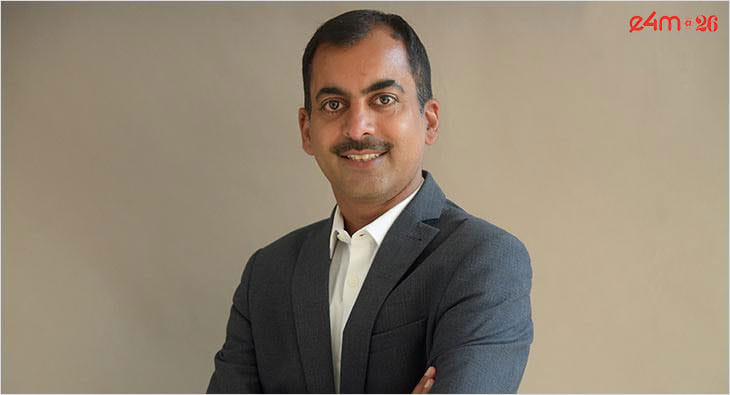

- Tejinder Gill, VP of The Trade Desk for India and SEA, notes that India's connected TV (CTV) advertising market is still developing, primarily relying on fixed CPMs, unlike Southeast Asia where auction-based buying is more prevalent.
- Gill anticipates that as the CTV market in India matures, it will transition towards a more programmatic and biddable buying ecosystem, similar to the evolution seen in digital advertising.
- He highlights the potential for small and medium-sized enterprises (MSMEs) to engage in CTV advertising, emphasizing the need for a self-serve model to facilitate their participation.
- Gill observes that Gen Z is increasingly consuming content on CTV, spending over three hours daily, and suggests that advertisers should consider the interconnectedness of devices in their strategies to effectively reach this demographic.
The Trade Desk’s VP, India and SEA, Tejinder Gill, says India’s connected TV advertising market is still at a nascent stage, with most inventory bought on fixed CPMs. However, as CTV supply and audiences expand, he expects programmatic and auction-based buying to gain ground, similar to the evolution seen in digital advertising.
Connected TV (CTV) advertising in India is still largely driven by fixed-impression and fixed-CPM buying, unlike Southeast Asia where advertisers are increasingly able to buy CTV inventory through auctions and biddable mechanisms.
Gil believes this difference is largely a function of market maturity. He expects India to follow a trajectory similar to digital advertising, where biddable buying has expanded significantly over the past few years.
In an interaction with e4m, Gill also spoke about the potential for small and medium-sized businesses to enter CTV advertising, the emergence of free ad-supported television (FAST) channels, changing Gen Z consumption patterns and the likely trajectory of CTV advertising rates as inventory expands.
Here are the edited excerpts:
How has the advertising ecosystem evolved in India compared with Southeast Asia, particularly in programmatic and digital advertising?
There are essentially two basic buying methods in programmatic advertising. One is programmatic guaranteed, where you decide that you want to buy a certain number of impressions on television or CTV. The other is biddable buying.
In India, the market is still very much focused on fixed-impression buying. When you look at Southeast Asia, CTV has become much more biddable. You can buy connected TV inventory on an auction basis.
There are many more variables that can be considered. What kind of content are people watching? What device are they watching it on? What kind of Wi-Fi connection do they have? What language are they consuming content in? There are multiple variables against which you can bid.
So, the connected TV space in Southeast Asia is much more biddable, whereas India is still at a nascent stage. Media buying here is largely happening on fixed CPMs.
Do you expect India to move towards the kind of biddable CTV ecosystem that you are seeing in Southeast Asia?
Yes. If you look at how we started in India five years ago, almost 95% of the market was based on fixed buys.
But look at the broader digital advertising ecosystem today. The market has moved to almost 40% biddable buying, compared with literally around 10% earlier.
That transition happened within the OTT and digital ecosystem. The same trend will eventually play out in CTV once the base becomes large enough. As the CTV market scales, more inventory will become available and the buying ecosystem will gradually become more biddable.
What do you think will be the key drivers of CTV growth? Do you also see MSMEs becoming a significant advertiser segment for CTV?
If you take a step back, ultimately it is the audience that marketers want to target. Those audiences are consuming content across multiple devices.
Whether it is a large enterprise, an MSME or an SMB, the objective is ultimately to reach those consumers.
But there is a gap between the opportunity and the ability of smaller advertisers to access it. For CTV to reach that level, the entire buying process needs to become self-serve.
MSMEs typically want to operate on their own. They don't necessarily want to go through a large agency or have direct conversations with multiple media partners every time they want to run a campaign.
That journey is still a little far off for CTV.
Today, if you want to advertise on CTV, you either directly talk to the partners or go through large agencies. The opportunity exists and the scale exists, but the channel and the path to access it are still developing.
So, it might take a little longer.
The good thing, however, is that technology companies such as The Trade Desk are coming into India in a big way. The objective is to enable advertisers to create their own accounts and run advertising campaigns across connected TV platforms and channels.
As the ecosystem becomes more self-serve, I believe it will become much easier for smaller advertisers to participate.
FAST channels are increasingly growing in India. Do you expect social media influencers and creators to start creating content specifically for FAST channels?
Yes, absolutely.
The short answer is yes, because FAST is essentially another distribution channel.
The content remains the same. Whether you put that content on social media or distribute it through FAST channels, the underlying content can be similar.
As content creators evolve and technology evolves, there will simply be more platforms on which that content can be made available.
So, I definitely see creators expanding beyond traditional social platforms and exploring FAST and other connected-TV distribution channels.
Gen Z is emerging as an important audience on CTV. How do you see their content consumption changing?
One of the interesting insights we have seen is that the amount of time Gen Z spends on CTV is actually increasing.
There has been a perception among many marketers that Gen Z does not watch television. That is not really the case.
Gen Z is increasingly consuming content across two devices. There is the personal device, which is typically the phone, and then there is the connected TV.
If you look at my son, for example, he will also put on headphones. So, he is effectively doing three things at the same time.
The interesting opportunity for the future is to understand how these three devices — the phone, the audio device and the connected TV — can talk to each other.
I would say it is no longer just the living room. It is becoming a connected room, and Gen Z is increasingly part of these connected-room environments.
What does this mean for advertisers trying to understand Gen Z's behaviour?
The important thing is that Gen Z should not be viewed purely through the lens of mobile consumption.
They are still mobile-first consumers, but that does not mean they are mobile-only consumers.
They are spending significant amounts of time on CTV. The report indicates that Gen Z spends more than three hours a day on CTV.
They also appreciate the flexibility that CTV and OTT provide. They can pause, rewind and consume content at their own pace.
That is fundamentally different from traditional linear television, where you had to watch whatever was being broadcast at that particular time.
For Gen Z, CTV provides the ability to consume long-form content while retaining the flexibility associated with digital.
How does this multi-device behaviour influence the consumer journey?
This is where it gets particularly interesting.
In India, I don't think we make many decisions in isolation, particularly when it comes to larger household decisions.
Take something as simple as planning a holiday.
Suppose I see a big advertisement for a holiday destination on connected TV. That advertisement could trigger a thought in the household that we should take a holiday.
Then my son, who is Gen Z, might immediately pick up his phone and start searching. He might say, ‘Dad, not Maldives. We can do Mauritius or the Philippines.’
He then contributes his recommendations. My wife might subsequently take those recommendations and actually make the booking.
That is the kind of behavioural chain we are seeing.
The CTV creates the initial trigger, the phone becomes a research and discovery device, and another member of the household eventually converts that intent into an action.
So, Gen Z consumers have become increasingly dual-device consumers rather than being purely phone-only consumers.
Does this mean advertisers need to rethink the way they plan CTV and mobile together?
Absolutely.
The opportunity is to understand the consumer journey across screens rather than treating every screen in isolation.
The connected TV can create the initial awareness and emotional impact. The mobile device can then facilitate search, comparison and research.
That is where the future becomes interesting — when these devices can work together and advertisers can understand the journey across them.
The fact that CTV is being consumed within a household makes this even more relevant. Around 80% of the audience is still viewing CTV in a household environment.
The household context is therefore very important to understanding the role CTV can play.
You have seen the advertising industry evolve from linear TV to CTV. How do you see advertising rates evolving?
Linear television and CTV are bought and sold using very different units.
CTV is bought and sold more like digital media.
When CTV started, CPMs were on the higher side. But today we have around 207 million consumers watching CTV, which means the supply of inventory is increasing.
Ultimately, this is a supply-and-demand equation.
As supply increases and the market becomes more fragmented, the future of CTV pricing will move downwards.
The good thing about CTV is that it continues to be measured more like a digital medium. Therefore, the yardsticks for pricing will continue to be digital.
CPMs, creative duration and other digital advertising parameters will remain relevant.
So, do you expect CTV CPMs to eventually normalise?
Yes.
As supply increases, more consumers will watch CTV and more content will need to be created. That content will be distributed across an increasing number of platforms.
When you have disproportionately increasing supply, prices will eventually normalise and potentially come down.
The important point is that this is a function of market maturity. As the ecosystem scales, supply becomes deeper, inventory becomes more fragmented and advertisers have more options.
That should ultimately create a more efficient CTV advertising market.
What would be the biggest change you expect in India's CTV advertising ecosystem over the next few years?
The biggest change will be the movement from a predominantly fixed-buy market towards a more biddable and programmatic market.
We have already seen this happen in digital advertising. India moved from a market where fixed buying dominated to one where biddable buying has become a significant part of the ecosystem.
CTV is still earlier in that journey.
As audiences grow, supply expands, more platforms participate and technology makes the buying process easier, I expect CTV to follow the same trajectory.
The opportunity is not only about having more people watch connected TV. It is about making the entire ecosystem more accessible, measurable, addressable and efficient for advertisers.
And that is ultimately what will allow CTV to move from being an emerging medium to becoming a mainstream part of the media plan.
Read more news about Digital Media, Internet Advertising, Marketing News, Television Media, Radio Media
For more updates, be socially connected with us onInstagram, LinkedIn, Twitter, Facebook, YouTube & Google News